
The interesting part of AR commerce is not putting a product into a camera view. It is helping someone make a better decision before they buy, using the room and the real dimensions as part of the experience.
Live-previewing furniture from any website in your home was a big wish of mine. Since it did not exist in the way I wanted, I built it myself. The idea is simple: scan your room with your phone, choose a product from a furniture or decor website and see how it would look in your actual space.
Start where the product already exists
The important part is that the product still starts on the website where you found it. Inside the app, you can open any furniture or decor website, choose a product and hit a button to collect the information needed to generate a 3D model. You do not need to rebuild the whole furniture catalogue first.
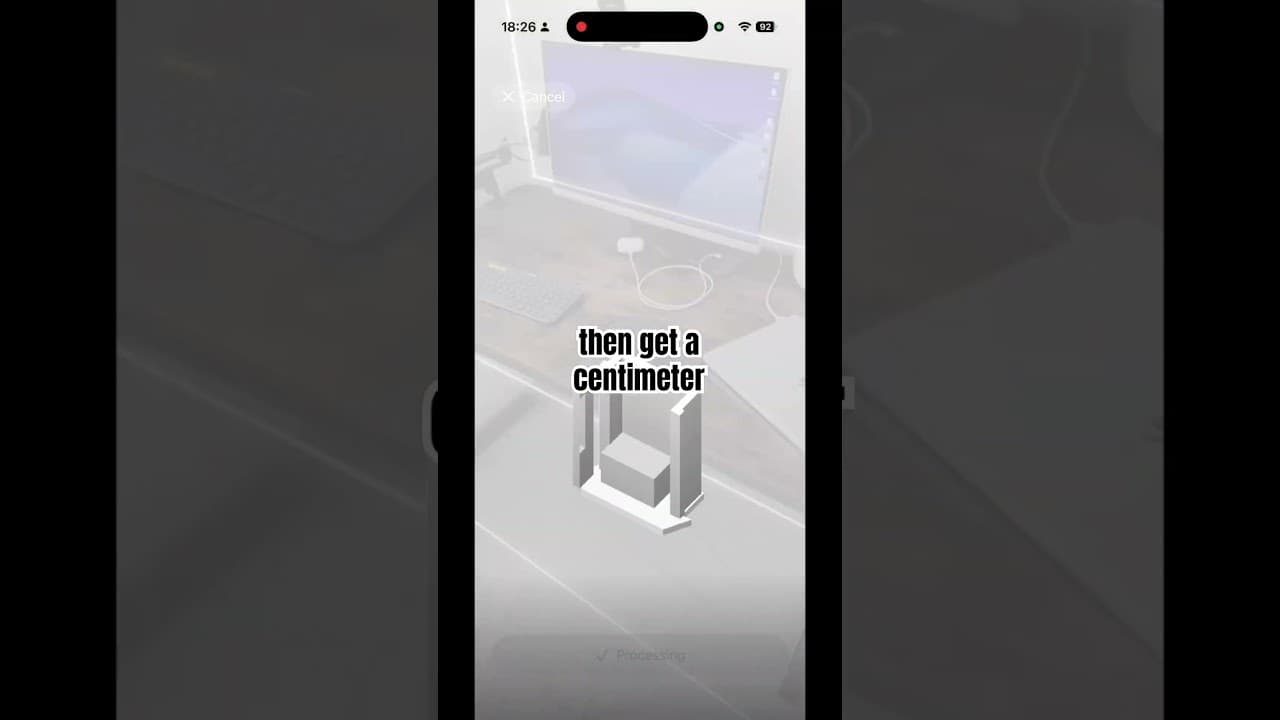
Before that, you can scan the whole room or only part of it with your phone. The result is a centimetre-accurate 3D model of the space. That room gives the product somewhere meaningful to go, instead of showing a piece of furniture floating in a generic camera view.
From an image to a room decision
Once the model is generated, you can place it in the room, adjust its position and rotation and then see live in AR how it would look. This is the workflow behind Lumiz: room scanning, product capture, image-to-3D generation and AR placement in one connected process.
That is more useful than a one-off AR effect because it answers a real question. Does the chair fit? Is the table too large? Does the colour work in the room? AR does not need to make the purchase exciting every second. It needs to remove the uncertainty that makes the purchase difficult.
The difficult parts are not only visual
There are still a few details that matter. The room scan needs to capture enough of the space, and the generated model needs to be scaled correctly. If those pieces are unreliable, the experience can look convincing while giving the wrong answer. That is why the room and the product information are just as important as the final AR view.
The best AR commerce experiences are honest about what they can prove. They do not replace every part of the buying decision, but they can make a room-scale question much easier to answer. That is a good use of spatial computing: add context where the ordinary interface is missing it.
The full video shows the idea in a compact form. The larger opportunity is to make the route from any product website to a useful spatial decision feel natural, without asking people to learn a completely new shopping behaviour.